
To repair small refrigerator units, most homeowners first check the thermostat, door seal, and condenser coils before calling a technician. Many households in Santa Rosa, California rely on compact fridges for garages, offices, or extra kitchen storage, and when these units stop cooling, a fast diagnosis often saves both food and money. This guide walks through the most common problems, a step-by-step troubleshooting process, realistic repair costs, and the point at which calling a professional makes more sense than continuing to tinker.
Quick Answer: Repairing a small refrigerator typically costs between $80 and $250 and takes under two hours once the problem is identified. Most issues trace back to dirty coils, a worn door gasket, a stuck thermostat, or a failing compressor.
What Does It Mean to Repair a Small Refrigerator?
Repair small refrigerator work is the process of diagnosing and fixing issues inside compact and mini fridge units, generally ranging from 1.7 to 4.5 cubic feet. Unlike full-size models, these smaller units cram the same essential parts — a compressor, evaporator, thermostat, and condenser coil — into a tighter footprint. As a result, dust buildup, airflow restriction, and door seal wear tend to cause problems faster than they would in a larger appliance.
Because space inside these units is limited, technicians often need specialized tools to access components without damaging the cabinet. Consequently, many homeowners attempt the easy fixes themselves and call a professional only when the compressor or sealed refrigerant system is involved.
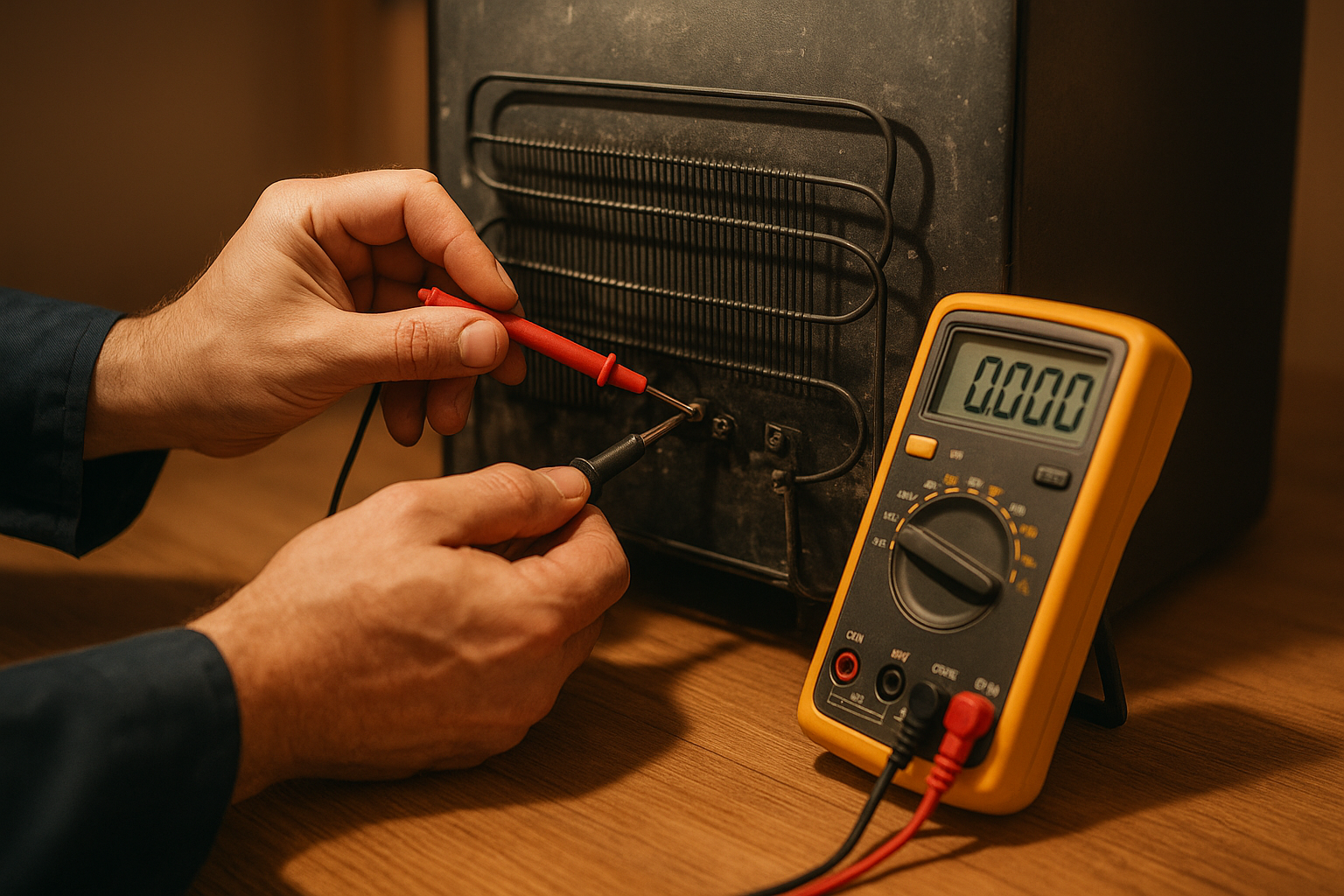
A technician checks compressor function, one of the most common reasons homeowners need to repair small refrigerator units.
Common Problems When You Repair Small Refrigerator Units
Several issues show up again and again in compact fridges, and recognizing them early can prevent a small fix from turning into a full replacement. For example, a refrigerator that runs constantly but never gets cold often has blocked airflow or a failing thermostat sensor. Similarly, a warm interior paired with a hot exterior panel can point toward a struggling compressor.
In addition, leaks under the unit usually trace back to a clogged defrost drain or a cracked drip pan, both of which are inexpensive to fix. Meanwhile, loud buzzing or rattling noises typically mean the fridge is not sitting level, or a fan blade is hitting ice buildup inside the freezer compartment.
According to the U.S. Department of Energy, refrigeration units account for roughly 4% of total household energy use, so a poorly sealed or malfunctioning small fridge can quietly raise utility bills even before it fails completely. Therefore, catching these warning signs early protects both your food and your wallet.
Signs Your Compact Fridge Needs Professional Attention
Not every problem can be solved with a coil brush and a screwdriver. Specifically, if the compressor hums loudly but the interior stays warm, or if you smell a chemical odor near the back panel, it is time to stop troubleshooting and call a technician. Refrigerant handling requires EPA certification under federal law, so attempting a sealed-system repair without proper training can be both unsafe and illegal.
Furthermore, frequent circuit breaker trips, visible frost inside the fresh food section, or a door that will not seal no matter how many times you adjust it are all signs of deeper mechanical failure. In these cases, a professional diagnosis prevents wasted time and avoids further damage to electrical components.
If you are unsure whether your symptoms point to a simple fix or a bigger issue, this refrigerator troubleshooting guide walks through additional diagnostic steps before you schedule a service call.
How to Troubleshoot a Small Fridge: Step-by-Step
Before scheduling a repair, it helps to run through a short diagnostic checklist. The following steps cover the most frequent causes of small refrigerator failure and typically take less than thirty minutes to complete.
- Check the power source. Unplug the refrigerator, inspect the cord for visible damage, and plug it into a different outlet to rule out a tripped circuit or a faulty wall socket.
- Clean the condenser coils. Pull the unit away from the wall, locate the coils on the back or underneath the cabinet, and remove dust buildup with a coil brush to restore proper airflow.
- Inspect the door gasket. Run your fingers along the rubber seal and close the door on a piece of paper to check for gaps that let cold air escape and reduce cooling performance.
- Test the thermostat setting. Adjust the thermostat dial to a colder setting and wait several hours, listening for the compressor to cycle on while confirming the interior temperature drops.
- Listen for compressor sounds. Place your ear near the back panel and listen for humming, clicking, or silence, which can indicate whether the compressor is functioning or needs professional attention.
If these steps do not resolve the issue, the problem likely involves a part that requires professional diagnostic tools, such as a refrigerant gauge or amperage meter.
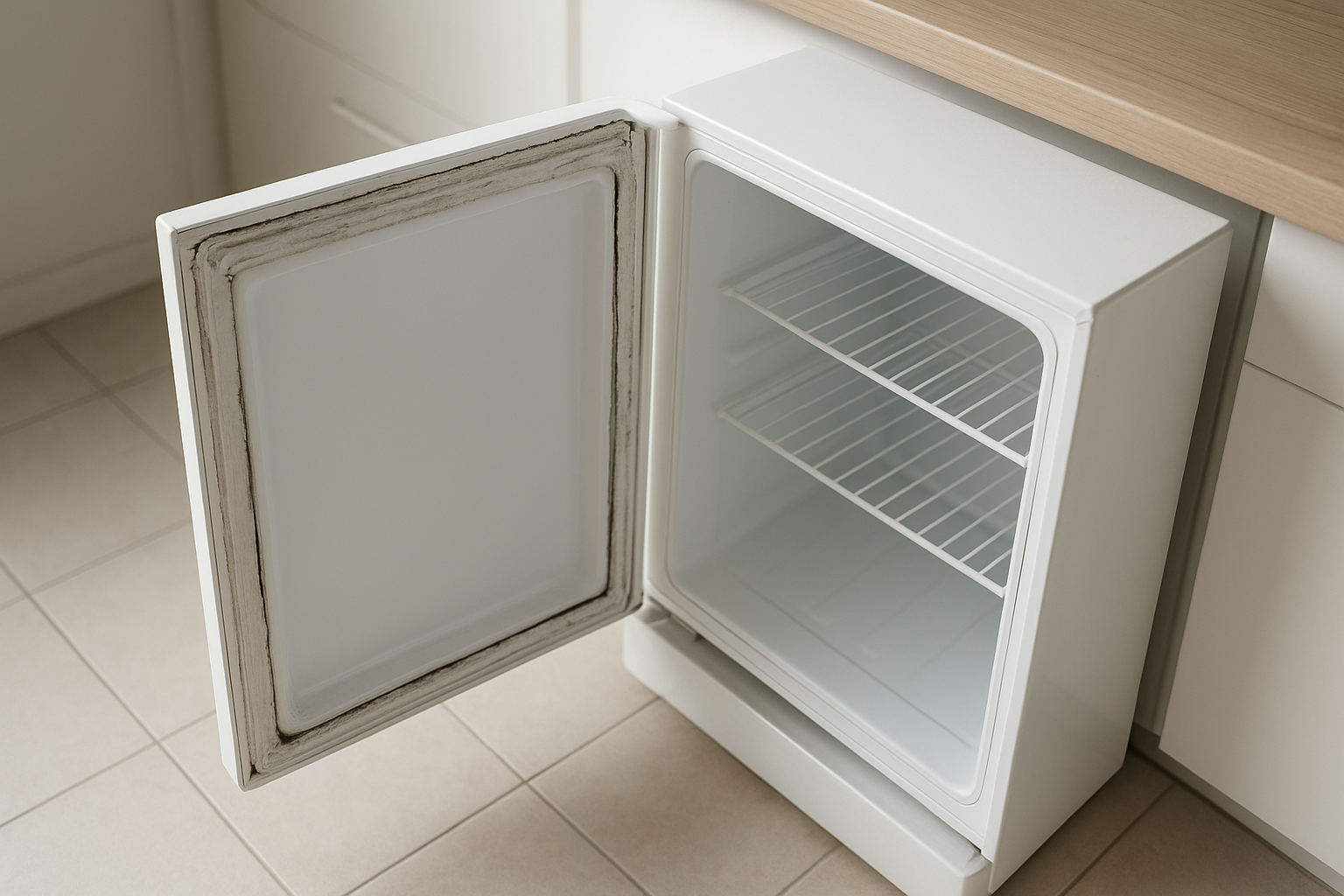
A damaged door gasket is one of the easiest fixes when you repair small refrigerator cooling problems.
Average Cost to Repair a Mini Refrigerator in Santa Rosa
Repair costs vary depending on the part involved and how much labor the fix requires. On average, homeowners in Santa Rosa pay between $80 and $250 for common repairs like gasket replacement, thermostat swaps, or coil cleaning. However, compressor replacement or sealed-system work can push the total closer to $300, since these repairs require specialized refrigerant handling equipment.
For a detailed breakdown of pricing by repair type, this refrigerator repair cost guide compares typical price ranges across different failure points. In addition, local service providers like Gold Ridge Appliance offer transparent, flat-rate diagnostics so customers know the cost before any work begins.
Proper food storage temperature also matters once the repair is complete. The FDA recommends keeping refrigerators at or below 40°F to prevent bacterial growth, so a working thermostat is just as important as the compressor itself.
Mini Fridge Repair vs Replacement: Which Makes Sense?
Deciding between mini fridge repair and buying new depends largely on the unit’s age and the type of failure. Generally speaking, if the repair cost stays under half the price of a comparable new model and the fridge is less than eight years old, repairing is the more economical choice.
On the other hand, a unit with a failed compressor, extensive rust, or repeated breakdowns within a short period is often better replaced. As a refrigerator ages, its seals and electrical components naturally wear down, making future failures more likely even after a successful repair.
For leaks specifically, this step-by-step leaking refrigerator guide explains how to determine whether a drain clog or a cracked seal is the real culprit before deciding on repair or replacement.
Why Choose Gold Ridge Appliance for Small Fridge Repair
Gold Ridge Appliance provides fast, affordable, and honest appliance repair services throughout Santa Rosa, California, including refrigerators, washers, dryers, ovens, and dishwashers. Technicians focus on clear explanations and fair pricing, so customers understand exactly what is wrong before any repair begins.
For residents searching for reliable local help, this Santa Rosa refrigerator repair overview and this fast and affordable fridge repair page outline same-day service options for both full-size and compact units.
Frequently Asked Questions About Repair Small Refrigerator Services
What does it mean to repair a small refrigerator?
To repair small refrigerator units means diagnosing and fixing issues such as poor cooling, unusual noise, leaks, or a broken seal in compact units under five cubic feet. Technicians typically check the thermostat, compressor, gasket, and condenser coils.
How much does it cost to repair a small refrigerator?
Most small refrigerator repairs cost between $80 and $250, depending on the part needed and labor time. A failed compressor or sealed system repair can push costs toward $300 or more.
Can I repair a small refrigerator myself?
Simple fixes like cleaning coils, adjusting the thermostat, or replacing a door gasket are doable for most homeowners. However, compressor or refrigerant issues require a licensed technician because they involve sealed, pressurized systems.
Why is my mini fridge not cooling?
A mini fridge that will not cool usually has a dirty condenser coil, a faulty thermostat, or a door seal that is not closing fully. Checking airflow around the unit often resolves the problem quickly.
How long does a small refrigerator repair take?
Most small refrigerator repairs take between 30 minutes and two hours once the technician identifies the problem. Same-day service is common when the part is already in stock.
What are common mistakes people make when fixing a mini fridge?
Common mistakes include ignoring dirty coils, overloading the unit, and attempting to recharge refrigerant without proper tools or certification. These errors can shorten the appliance’s lifespan or void a warranty.
Is it better to repair or replace a small refrigerator?
If the repair cost is less than half the price of a new unit and the fridge is under eight years old, repair usually makes more financial sense. Older units with compressor failure are often better replaced.
How do I know if my compact fridge compressor is bad?
Signs of a failing compressor include loud clicking, constant running without cooling, and a hot exterior near the back panel. A technician can confirm this with an amperage test.
Why does my small refrigerator make a buzzing noise?
Buzzing often comes from a loose compressor mount, a failing fan motor, or the unit not sitting level on the floor. Leveling the fridge or tightening internal components usually stops the noise.
How often should a small refrigerator be serviced?
Cleaning the coils and checking the gasket every six months helps prevent most repair needs. A full professional inspection once a year is recommended for units used daily.
What tools do I need for basic small fridge repairs?
Basic repairs require a screwdriver set, a multimeter, a coil brush, and a flashlight. More advanced repairs involving refrigerant require EPA-certified equipment and training.
Does Gold Ridge Appliance offer same-day small refrigerator repair in Santa Rosa?
Yes, Gold Ridge Appliance provides same-day repair small refrigerator service throughout Santa Rosa, California for most common issues. Technicians arrive with parts on hand to minimize return visits.
What is the average lifespan of a small refrigerator?
Most compact and mini refrigerators last between eight and twelve years with proper maintenance. Regular coil cleaning and avoiding overloading can extend that lifespan further.
Need hands-on help right away? Visit Gold Ridge Appliance to schedule fast, honest, same-day service for your small refrigerator in Santa Rosa.
Final Thoughts on Repairing a Small Refrigerator
In summary, learning to repair small refrigerator issues starts with the basics: clean coils, a snug door seal, and a properly set thermostat solve the majority of complaints. However, once compressor noise, chemical odors, or repeated cooling failures show up, calling a trained technician protects both the appliance and your household food safety.
Ultimately, whether you tackle the fix yourself or bring in a professional, acting quickly on small refrigerator problems prevents bigger repair bills down the road. For homeowners in Santa Rosa, California, a quick call to a trusted local team can mean same-day cooling restored and far less wasted food.
