
Dishwasher not draining troubleshooting usually starts with one frustrating moment: you open the door after a full cycle and find a shallow, cloudy pool sitting at the bottom of the tub. Fortunately, this is one of the most common appliance complaints technicians hear, and in the vast majority of cases the fix is far simpler than it looks. Specifically, a clogged filter, a kinked hose, a blocked air gap, or a worn drain pump cause nearly every drainage failure on record. As a result, a focused 20-minute check can often save you both a service call and a repair bill. In this complete guide, Goldridge Appliance in Santa Rosa walks through every cause, every fix, and every warning sign — covering far more ground than a typical checklist so you can solve the problem once and for all.
Quick Answer: If your dishwasher won’t drain, check the drain filter and drain hose for clogs first, then inspect the air gap and the garbage disposal knockout plug. Most dishwasher not draining troubleshooting cases trace back to a simple blockage rather than a mechanical failure, and clearing it usually takes less than 20 minutes. If every one of those parts checks out clean, the drain pump, solenoid, or control board is the next likely suspect.
What Is Dishwasher Not Draining Troubleshooting?
Dishwasher not draining troubleshooting is the systematic process of figuring out why water remains in a dishwasher after a cycle ends, then correcting the underlying issue. Typically, it involves checking the drain filter, the drain hose, the air gap, and the drain pump — the small motor-driven component that pushes used water out of the appliance. Because these parts are accessible without special training, most homeowners can complete the first few checks in under fifteen minutes using only basic household tools.
In addition, understanding the appliance’s drain path explains why drainage problems happen in the first place. A standard dishwasher, as described in Wikipedia’s dishwasher overview, relies on a pump to cycle water through spray arms and then expel it through a hose connected to either a sink drain or a garbage disposal. If any single point along that path is blocked, water simply has nowhere to go — which is exactly why troubleshooting works best when you move through the path in order, from the easiest point to check to the hardest.
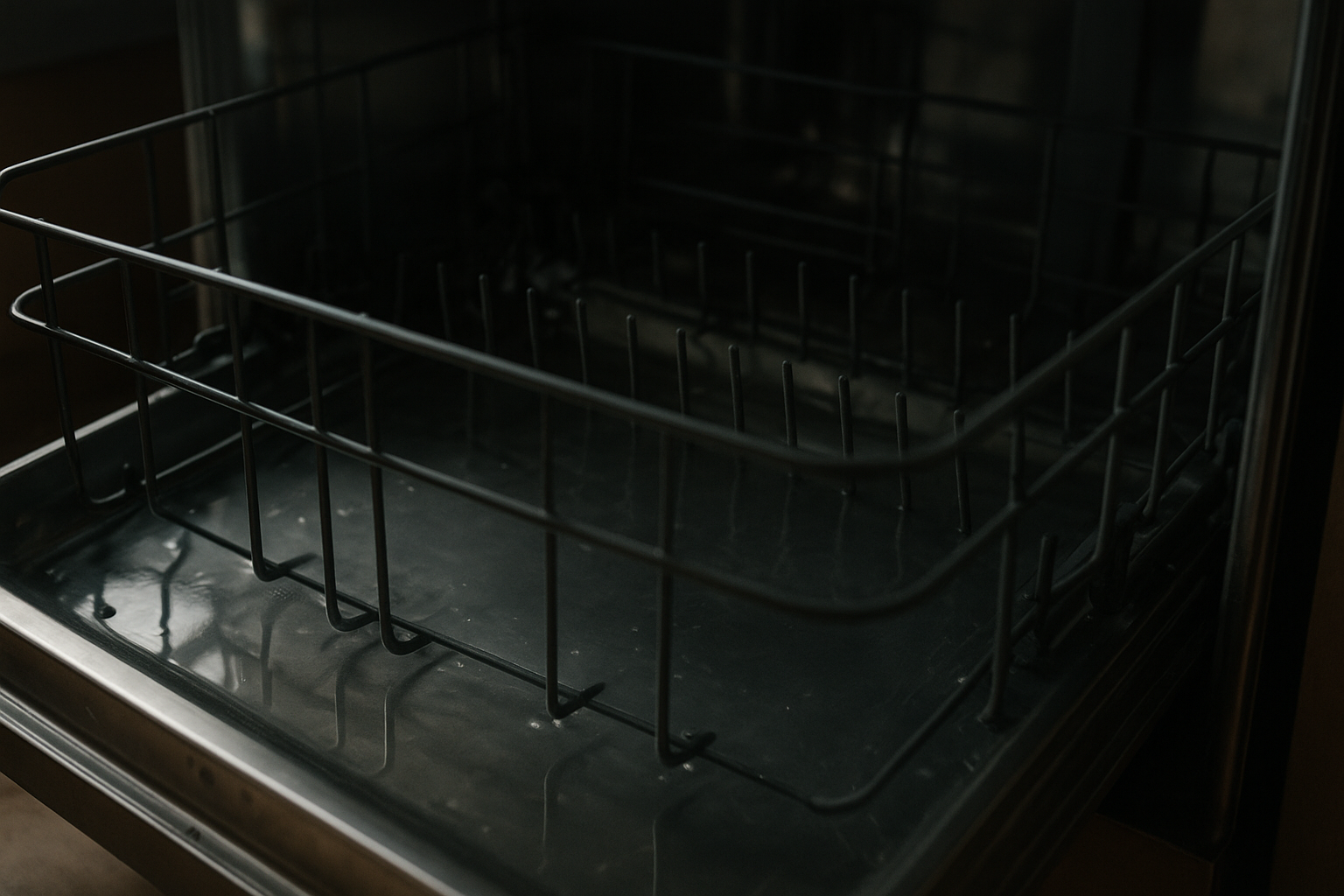
Standing water like this is the first clue that dishwasher not draining troubleshooting is needed.
Common Signs Your Dishwasher Won’t Drain
Before diving into repairs, it helps to confirm the symptoms. Most draining problems share a few telltale warning signs, and recognizing them early can prevent water damage to cabinets and flooring.
- Standing water at the bottom of the tub after a completed cycle
- A musty or sour odor coming from the dishwasher
- Dishes that remain wet, cloudy, or coated in food residue
- Gurgling or humming noises during the drain phase
- Error codes related to drainage on digital control panels
- A cycle that takes noticeably longer than usual to finish
- Water backing up into the sink when the dishwasher runs
Tools and Safety Prep Before You Start Troubleshooting
A little preparation makes dishwasher not draining troubleshooting faster and safer. You don’t need a professional toolkit — most households already own everything required.
- A towel and a cup or small container for bailing out standing water
- A flashlight to inspect the filter basket and hose connections
- A Phillips screwdriver for accessing hose clamps or the kick panel
- A shop vacuum (optional) to remove stubborn standing water quickly
- Rubber gloves for handling food debris safely
Above all, always disconnect power before reaching into the tub or pulling the unit away from the cabinet. The U.S. Consumer Product Safety guidance on major appliances consistently recommends cutting power at the breaker, not just the control panel, since some components stay energized even when the display is off.
Dishwasher Not Draining Troubleshooting: Step-by-Step Guide
Once you’ve confirmed the signs, follow these steps in order. As a result, you’ll move from the most common causes to the least common, which saves time and avoids unnecessary disassembly.
- Turn off power and remove standing water. Unplug the dishwasher or switch off its breaker for safety, then use a cup and towel to bail out remaining water before inspecting any further parts.
- Clean the drain filter. Locate the removable filter at the bottom of the tub, twist or lift it out, and rinse away trapped food particles under running water until it is completely clear.
- Check the drain hose for kinks or clogs. Pull the unit out slightly to access the corrugated hose, then check for sharp bends or visible blockages restricting water flow along its length.
- Inspect the air gap. If your sink has a small cylindrical fitting near the faucet, remove its cover and clear any debris blocking the connection between the dishwasher and the disposal.
- Confirm the disposal knockout plug was removed. On newly installed units, check that the knockout plug inside the garbage disposal’s inlet was removed, since a forgotten plug fully blocks drainage.
- Run the garbage disposal and check its blades. A disposal packed with old food can restrict or completely block the shared drain line, so run it briefly and listen for a smooth, even hum.
- Listen for the drain pump during a cycle. Run a short cycle and listen near the base for a humming sound, which indicates the drain pump motor is attempting to operate correctly.
- Check the drain solenoid or check valve. On models with a separate drain valve, inspect it for a stuck flap or solenoid that fails to open, since this can trap water even when the pump itself works fine.
- Run a test cycle to confirm the fix. After clearing every blockage, run a full cycle and check the tub afterward to confirm that water has drained completely and no new noises appear.
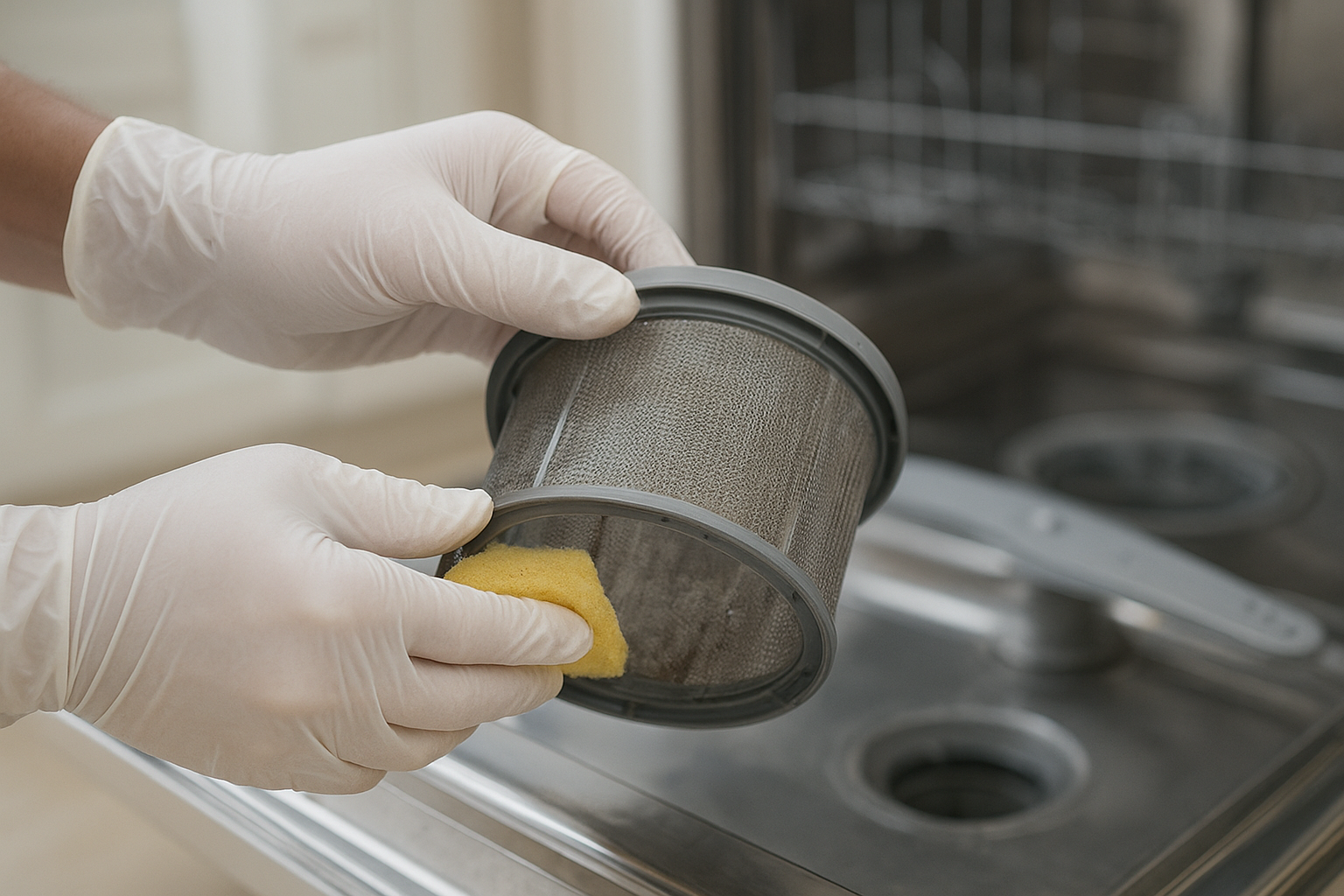
Cleaning the filter is often the fastest fix in dishwasher not draining troubleshooting.
Common Causes Behind Dishwasher Draining Problems
Although the symptoms look similar, the root causes of dishwasher draining problems vary quite a bit. For instance, a clogged filter is the most frequent culprit, followed closely by a blocked hose or disposal connection. In contrast, a failed drain pump, solenoid, or control board represents a smaller but considerably more expensive category of issues.
Clogged Drain Filter
Food particles, glass shards, and labels collect in the filter basket over time. Because this is the first stop for anything washed off your dishes, it clogs faster than any other part of the system.
Kinked or Blocked Drain Hose
The corrugated hose connecting the dishwasher to the sink drain or disposal can kink when the unit is pushed back into its cabinet space too tightly. Similarly, grease and food buildup can narrow the inside diameter until flow slows to a trickle.
Blocked Air Gap or Disposal Knockout Plug
The air gap prevents dirty sink water from siphoning back into the dishwasher, but it can trap debris just as easily as any other fitting. Meanwhile, a forgotten knockout plug inside a newly installed disposal is a surprisingly common and completely preventable cause.
Drain Pump, Drain Solenoid, and Check Valve Failures
The drain pump pushes water out through the hose, while a separate drain solenoid or check valve on some models controls when that water is allowed to leave the tub. If the solenoid fails to energize, or the check valve’s flap sticks shut, water can become trapped even though the pump itself runs perfectly. Technicians often test these parts with a multimeter to confirm continuity before replacing anything.
Broken Drive Belt (Older Models)
Some older dishwashers use a belt-driven pump assembly rather than a direct-drive motor. Over years of use, that belt can crack or slip off its pulley, which stops drainage entirely even though the motor still hums.
Float Switch and Overfill Protection Issues
The float switch sits inside the tub and tells the control board how much water is present. If it sticks in the “full” position, the machine may refuse to start a new fill or drain cycle correctly, which can look identical to a clogged drain from the outside.
Clogged or Malfunctioning Garbage Disposal
Because most dishwashers share a drain line with the garbage disposal, a clog inside the disposal chamber blocks the dishwasher just as effectively as a clog in its own hose. Running the disposal briefly before starting the dishwasher clears this path in advance.
According to ENERGY STAR, modern dishwashers use roughly three gallons of water per cycle, which means even a small blockage can quickly leave a noticeable pool behind. Likewise, hard water minerals can build up inside hoses and valves over months, gradually narrowing the passage until drainage slows or stops entirely. This is one reason the EPA’s WaterSense program recommends periodic appliance maintenance to protect both water efficiency and performance.
For a broader look at related issues, see Goldridge Appliance’s guide to dishwasher malfunction solutions for common problems, which covers additional symptoms beyond drainage alone.
Dishwasher Won’t Drain by Brand: Common Error Codes
Many manufacturers display a specific drainage error code before you even open the door, which can speed up troubleshooting considerably. While codes vary slightly by model year, these are the patterns technicians see most often.
- Whirlpool and KitchenAid: Flashing “Clean” light or a repeating five-beep sequence typically points to a drain blockage or pump issue.
- Bosch: An “E24” or “E15” code usually signals a drain hose blockage or a float switch sensing standing water.
- GE: A flashing “Clean” or “Sanitized” light combined with standing water generally points to the filter or drain pump.
- Samsung: A “5E” or “SE” code almost always means the drain system has detected a blockage or a failed pump.
- LG: An “OE” code indicates the unit has sensed it cannot complete its drain cycle, usually due to a clogged filter or hose.
Regardless of brand, the troubleshooting order stays the same: filter, hose, air gap, disposal, then pump. Consequently, you rarely need the owner’s manual just to begin diagnosing the problem.
Dishwasher Drainage Troubleshooting Table
For a quick side-by-side comparison, this table summarizes each cause, the typical fix, and roughly how difficult it is for a homeowner to handle alone.
When to Call a Professional for Dishwasher Repair in Santa Rosa and Sonoma County
Sometimes DIY dishwasher not draining troubleshooting isn’t enough. If the filter, hose, and air gap are all clear but water still won’t drain, the problem likely lies with the drain pump, motor, solenoid, or control board — components that generally require professional diagnosis and specialized testing equipment.
In that case, Santa Rosa homeowners can turn to Goldridge Appliance’s local dishwasher repair service for fast, honest diagnosis and same-day appointments in many cases. Homeowners located elsewhere in the county are equally well covered by the team’s Sonoma County dishwasher repair service, which offers the same fast, honest local fixes outside the Santa Rosa city limits. For homeowners who want extra peace of mind before scheduling a visit, reviewing these 10 warning signs your dishwasher needs repair can help confirm whether the issue is drainage-related or something else entirely.
How Much Does It Cost to Fix a Dishwasher That Won’t Drain?
Costs vary widely depending on the cause. Clearing a clogged filter or hose costs nothing if done yourself, while replacing a drain pump, solenoid, or control board involves both parts and labor. Consequently, getting an accurate quote before any work begins is important, since misdiagnosed drain pump replacements are one of the most common sources of appliance repair overspending.
For a detailed breakdown of typical pricing, Goldridge Appliance’s complete dishwasher repair cost guide outlines what to expect for common repairs, including drain pump replacement and hose repairs. Similarly, the team’s reliable dishwasher repair service in Santa Rosa page explains how fast fixes are prioritized to minimize downtime in your kitchen.
Preventing Future Dishwasher Drainage Issues
Above all, prevention is cheaper than repair. A few consistent habits can dramatically reduce the odds of facing dishwasher draining problems again.
- Scrape large food particles off dishes before loading
- Clean the drain filter every two to four weeks
- Run the garbage disposal briefly before starting the dishwasher
- Use a dishwasher-safe descaler monthly in areas with hard water
- Inspect the drain hose for kinks whenever the unit is moved
- Run hot water in the sink before starting a cycle to warm the pipes
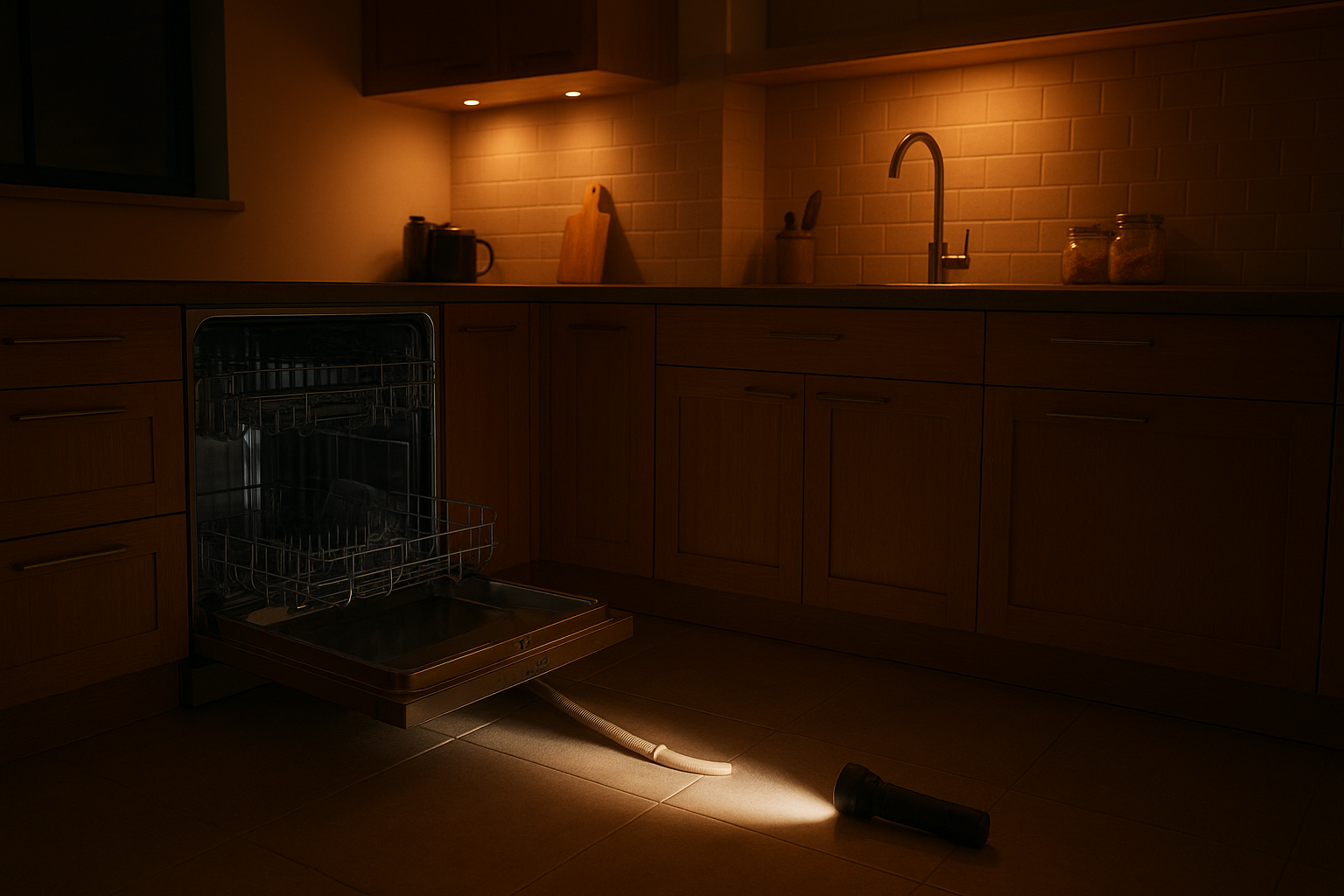
Regular hose inspections help prevent repeated dishwasher draining problems.
Common Mistakes That Make Troubleshooting Harder
Even motivated homeowners can slow themselves down with a few avoidable mistakes. Watch for these before you start.
- Skipping the filter check and assuming the pump has failed right away
- Running repeated cycles on a full tub, which can overflow onto the floor
- Ignoring the disposal even though it shares the same drain line
- Ordering a replacement pump before confirming the pump is actually the problem
- Forgetting to cut power before reaching into the tub or pulling the unit out
Frequently Asked Questions About Dishwasher Not Draining Troubleshooting
What causes a dishwasher not to drain?
A dishwasher usually fails to drain because of a clogged filter, a kinked or blocked drain hose, or a worn drain pump. In newer installations, an unremoved garbage disposal knockout plug is also a frequent culprit.
How do I know if my dishwasher’s drain filter is clogged?
Look for standing water at the bottom of the tub, a foul odor, or food debris trapped around the filter screen. Removing and rinsing the filter under running water usually reveals the blockage immediately.
Why is dishwasher not draining troubleshooting important before calling a repair technician?
Dishwasher not draining troubleshooting helps you identify simple, low-cost fixes like clearing a filter before paying for a service call. In many cases, the issue can be resolved in minutes without any tools or replacement parts.
Can a clogged garbage disposal cause a dishwasher to stop draining?
Yes, because most dishwashers drain through the garbage disposal’s internal connection. If the disposal is clogged or its knockout plug was never removed during installation, water has nowhere to go.
How long does dishwasher not draining troubleshooting usually take?
Basic dishwasher not draining troubleshooting, including checking the filter, hose, and air gap, typically takes 15 to 30 minutes. More involved pump or solenoid inspections may take closer to an hour.
What tools do I need for dishwasher not draining troubleshooting at home?
Most steps only require a towel, a cup for bailing water, a flashlight, and a screwdriver to access the filter or hose clamps. A shop vacuum can help remove stubborn standing water quickly.
Is it safe to run vinegar or baking soda through a dishwasher that won’t drain?
It is safe but only effective for mild buildup, not a full blockage. If water still will not drain after cleaning the filter, vinegar alone will not solve a mechanical pump, solenoid, or hose problem.
How much does it cost to repair a dishwasher that won’t drain?
Simple filter or hose fixes often cost very little when done yourself, while professional repairs for a failed drain pump typically run between $150 and $350 depending on the model and labor rates. A full price breakdown is available in Goldridge Appliance’s dishwasher repair cost guide.
What is the difference between a drain hose clog and a pump failure?
A clogged hose usually causes slow draining or gurgling noises, while a failed pump often means the dishwasher does not attempt to drain at all. Listening for the pump’s hum during the drain cycle helps tell them apart.
Can hard water cause dishwasher draining problems?
Yes, mineral buildup from hard water can clog filters, hoses, and valves over time, restricting water flow. Regular cleaning cycles with a dishwasher-safe descaler can reduce this risk significantly.
What does a drain solenoid or check valve do, and why does it fail?
A drain solenoid or check valve controls when water is allowed to leave the tub, separate from the pump itself. It typically fails due to a stuck flap, worn solenoid coil, or debris lodged in the mechanism.
What is the most common mistake people make when troubleshooting a dishwasher drain?
The most common mistake is skipping the filter check and assuming the pump has failed. A dirty filter accounts for a large share of drainage complaints and is the fastest thing to inspect first.
When should I call a professional instead of doing DIY dishwasher not draining troubleshooting?
Call a professional if the filter, hose, and air gap are clear but the dishwasher still will not drain, since this usually points to a failed pump, solenoid, or control board. Santa Rosa and Sonoma County homeowners can reach Goldridge Appliance for same-day diagnosis.
How often should I clean my dishwasher’s drain filter to prevent clogs?
Most manufacturers recommend cleaning the filter every two to four weeks, depending on usage. Households that frequently skip pre-rinsing dishes should check it more often to avoid repeat drainage problems.
Final Thoughts on Fixing a Dishwasher That Won’t Drain
In summary, dishwasher not draining troubleshooting usually starts with the simplest parts: the filter, the hose, and the air gap. Most of the time, clearing a blockage in one of these areas solves the problem without any professional help. However, if water still pools after working through every step — including the drain solenoid, float switch, and disposal connection — the pump or control board is likely at fault, and that’s the point where calling a licensed technician makes sense. For Santa Rosa and Sonoma County homeowners, Goldridge Appliance offers fast, affordable, and honest same-day service to get the dishwasher draining properly again.
