
Dishwasher malfunction solutions can save homeowners both time and money the moment a dishwasher stops cleaning dishes properly or refuses to start altogether. In fact, appliance breakdowns like this rank among the most common household repair calls across Sonoma County. This guide walks through the most frequent causes of dishwasher problems, practical troubleshooting steps, and clear guidance on when to call a professional. Whether the unit won’t start, won’t drain, or leaves dishes dirty, understanding these dishwasher malfunction solutions helps you decide what to try yourself and when expert help is worth it.
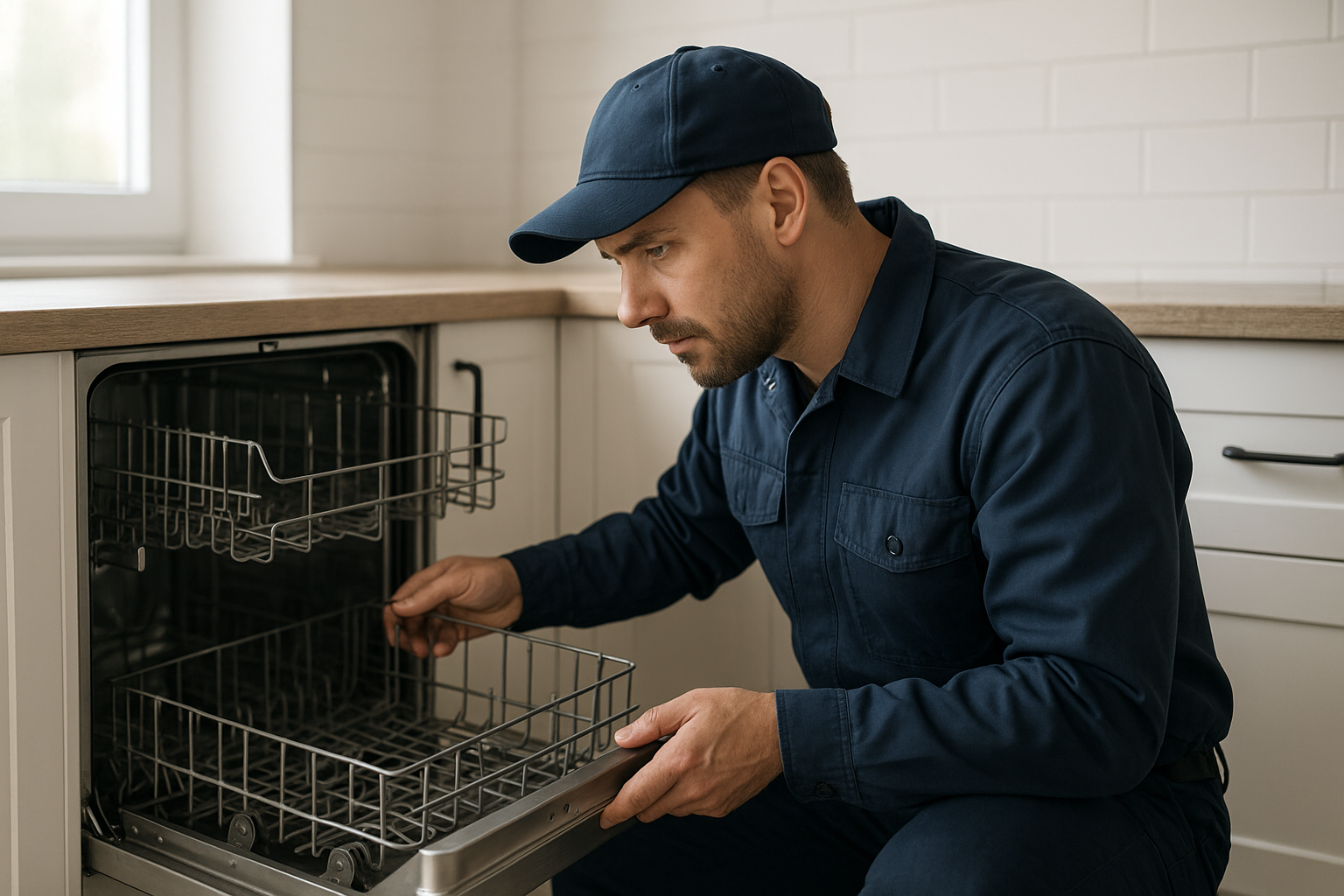
Finding the right dishwasher malfunction solutions often starts with a simple visual inspection.
What Are Dishwasher Malfunction Solutions?
Dishwasher malfunction solutions are the diagnostic steps and repair methods used to identify and fix problems that prevent a dishwasher from cleaning, draining, or running correctly. These solutions range from simple do-it-yourself fixes, such as clearing a clogged filter, to professional repairs involving electrical components or water valves. Above all, effective solutions start with correctly identifying the malfunction’s root cause.
For example, a dishwasher that hums but doesn’t spray water often has a different fix than one that leaks from the door. Consequently, matching the symptom to the likely cause saves both time and unnecessary part replacement. According to the U.S. Department of Energy, modern dishwashers use far less water than older models, which means even small blockages can noticeably affect performance.
Common Dishwasher Problems and Their Root Causes
Before reaching for the phone, it helps to know which symptoms point to which causes. In particular, four issues account for most residential service calls in the Santa Rosa area.
Dishwasher Won’t Start
When a dishwasher won’t start, the cause is usually electrical rather than mechanical. Specifically, a tripped circuit breaker, a door that isn’t fully latched, or a faulty control board can all stop the cycle before it begins. Similarly, some models include a child lock feature that homeowners accidentally engage.
Dishwasher Not Draining Properly
A dishwasher that leaves standing water at the bottom usually has a blocked filter, a kinked drain hose, or a clogged garbage disposal connection. Therefore, checking the air gap and disposal first is often quicker than assuming the pump has failed. In many cases, this single fix restores normal drainage completely.
Dishwasher Leaving Dishes Dirty or Cloudy
Dirty dishes typically result from clogged spray arm holes, low water temperature, or using the wrong detergent type. Meanwhile, cloudy or etched glassware is frequently caused by hard water minerals combined with excess detergent. As a result, adjusting detergent amount and checking water hardness often solves the problem without any parts replacement.
Dishwasher Leaking Water
Leaks generally trace back to a worn door gasket, a loose water inlet valve, or overfilling with dish soap that produces excess suds. In contrast to drainage problems, leaks are often visible immediately and should be addressed quickly to prevent water damage to cabinets and flooring.
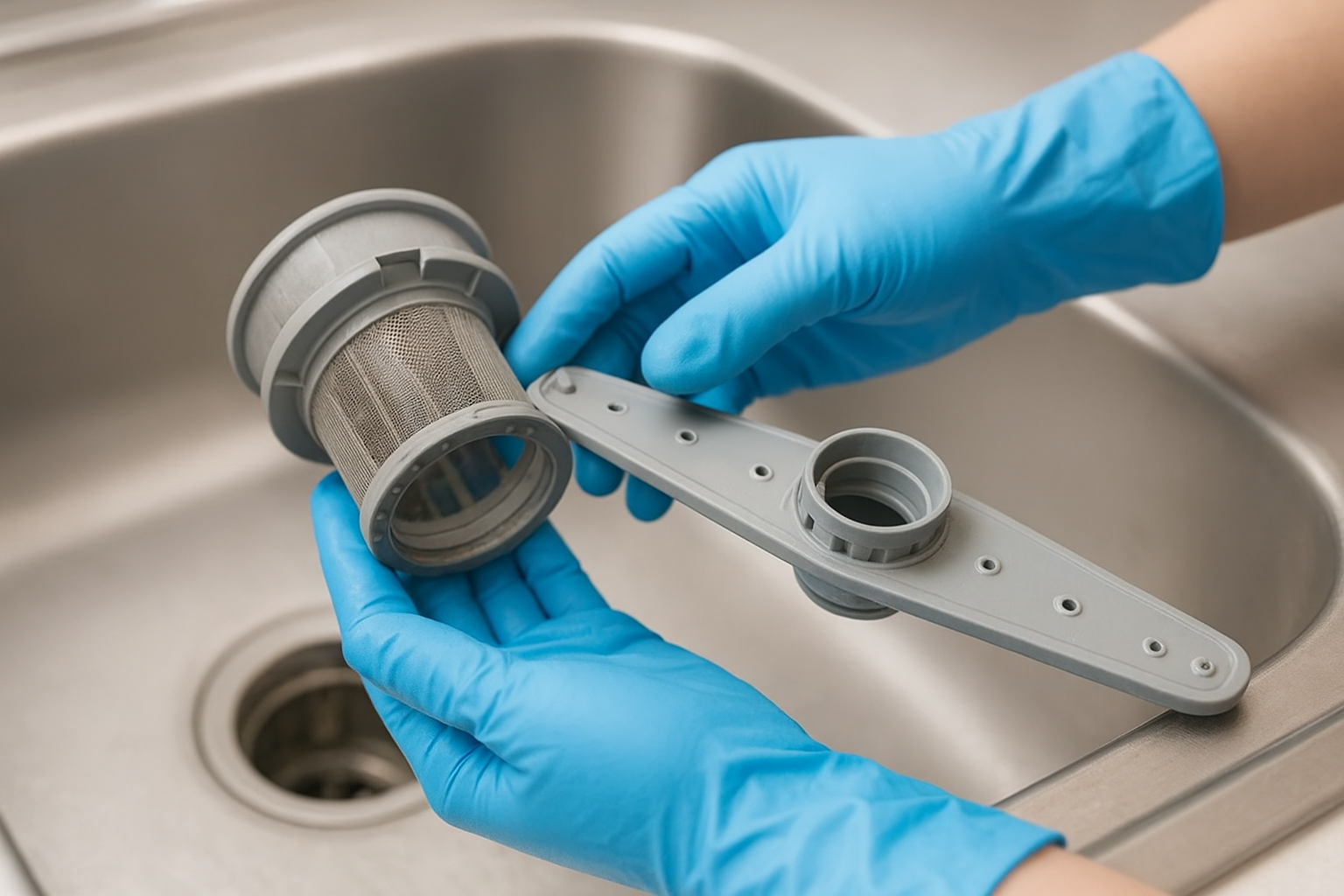
Cleaning the filter and spray arms resolves many drainage and dirty-dish complaints.
Step-by-Step Dishwasher Troubleshooting Process
Following a consistent process helps homeowners narrow down the cause before calling for help. Below is a straightforward sequence worth trying first.
- Check the power and door latch. Confirm the circuit breaker hasn’t tripped and make sure the door is fully latched, since many models won’t run at all without a secure door sensor.
- Inspect the water supply and drain hose. Verify the shutoff valve under the sink is open and check the drain hose for kinks or blockages that could stop proper draining.
- Clean the filter and spray arms. Remove the bottom filter basket, rinse away trapped debris, and check spray arm holes for clogs that reduce water pressure.
- Test the detergent dispenser and rinse aid. Confirm the dispenser opens fully during the cycle and the rinse aid compartment isn’t stuck, since both affect cleaning results.
- Run a diagnostic cycle and note any error codes. Start an empty cycle and watch the control panel for blinking lights, then record the pattern so a technician can diagnose faster if needed.
DIY Dishwasher Repair Tips vs. Calling a Professional
Some dishwasher repair tips are safe for any homeowner to try, while others carry real risk. For instance, cleaning filters, checking hoses, and adjusting detergent amounts require no special tools and pose little danger.
On the other hand, working with the water inlet valve, control board, or heating element involves electrical and plumbing connections that can cause injury or further damage if handled incorrectly. Consequently, these repairs are better suited to a trained appliance repair technician who has the right diagnostic tools, as detailed further on Goldridge Appliance’s service resources.
When to Call a Professional Appliance Repair Technician
It’s time to call a professional when the dishwasher trips the circuit breaker repeatedly, leaks from an unclear source, or shows persistent error codes after a filter cleaning and reset. Likewise, unusual grinding or burning smells during a cycle should never be ignored.
Homeowners in the region can review the full range of services covered under kitchen appliance repair, including dishwasher, oven, and refrigerator diagnostics, before booking a visit.
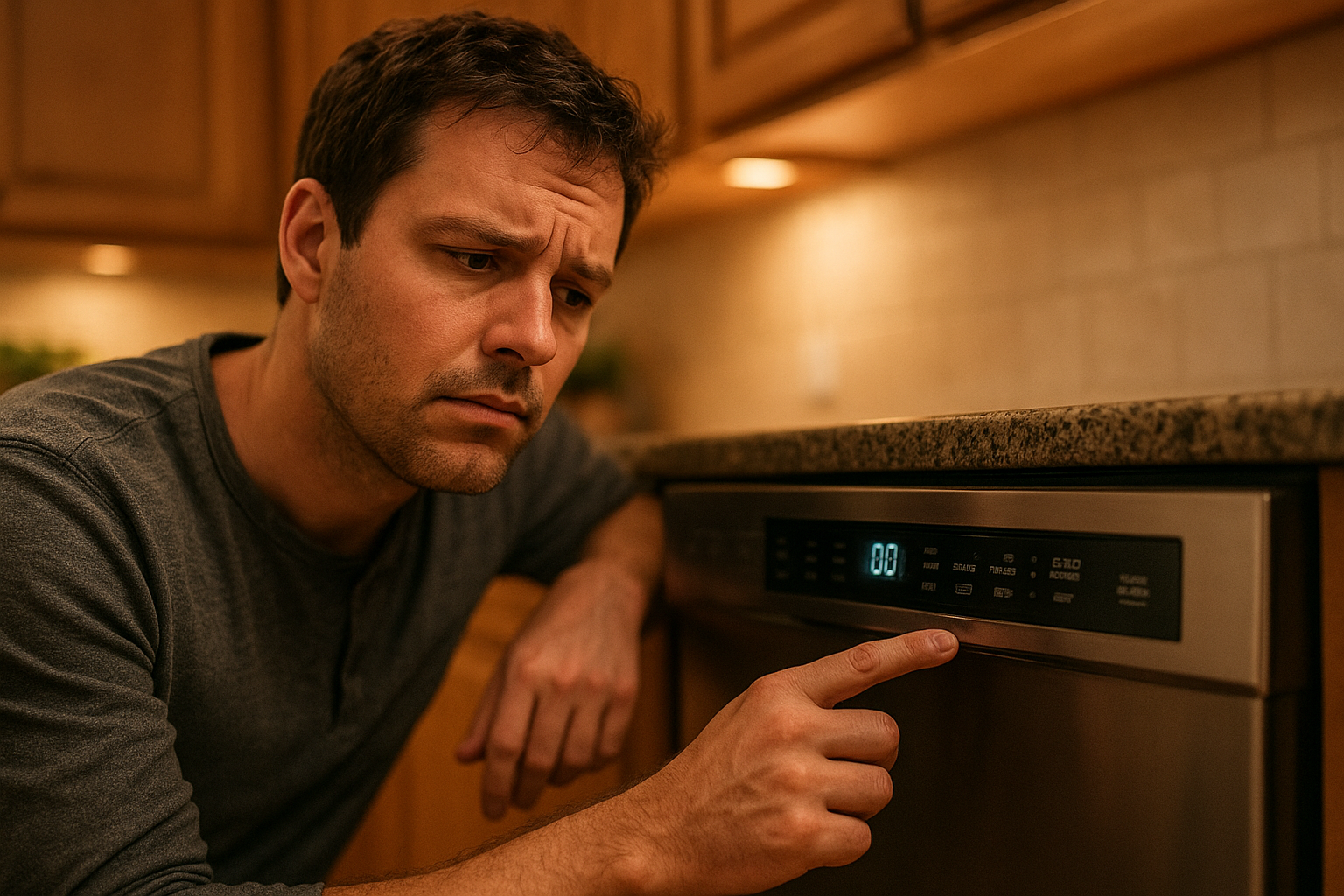
Noting error codes ahead of time speeds up any professional diagnosis.
Preventing Future Dishwasher Malfunctions
Prevention is generally cheaper than repair. Running a monthly cleaning cycle with a dishwasher-safe cleaner helps dissolve grease buildup that leads to poor drainage and odors over time.
In addition, scraping large food scraps off plates before loading reduces filter clogs significantly. The EPA’s WaterSense program also notes that well-maintained appliances use water more efficiently, which extends the lifespan of internal components like pumps and valves. For a broader look at appliance upkeep, the list of appliances we repair covers maintenance guidance for washers, dryers, and ovens as well.
Why Santa Rosa Homeowners Choose Local Appliance Experts
Local expertise matters when dealing with appliance breakdowns. Goldridge Appliance provides fast, affordable, and honest dishwasher malfunction solutions for homeowners throughout Santa Rosa and greater Sonoma County, with transparent pricing explained before any work begins.
Furthermore, straightforward online booking means residents can schedule a visit without long wait times. Those dealing with laundry issues alongside kitchen appliances can also explore washer and dryer repair services, or check areas served across Sonoma County to confirm coverage. According to the general history of dishwashers, these appliances have become a standard fixture in roughly 68% of U.S. households, which explains why prompt local repair support remains in steady demand.
Frequently Asked Questions About Dishwasher Malfunction Solutions
What are dishwasher malfunction solutions?
Dishwasher malfunction solutions are the troubleshooting steps and repairs used to fix problems like failure to start, poor drainage, or leaks. They range from simple filter cleaning to professional part replacement.
Why won’t my dishwasher start?
A dishwasher that won’t start often has a tripped circuit breaker, an unlatched door, or a faulty control board. Checking power and the door latch first solves many of these cases.
How do I fix a dishwasher that won’t drain?
Clear the filter, check the drain hose for kinks, and inspect the air gap or garbage disposal for clogs. If water still pools after cleaning these areas, the drain pump may need replacement.
Can I repair a dishwasher myself, or should I call a professional?
Simple issues like clogged filters or dirty spray arms are safe for DIY repair. However, electrical faults, water valve failures, or motor problems are best left to a licensed technician.
How much does dishwasher repair typically cost?
Minor dishwasher repairs often cost less than replacing the unit, while major part failures cost more. Getting a diagnostic estimate before work begins helps homeowners compare repair versus replacement.
How long does a dishwasher repair usually take?
Most dishwasher repairs are completed within one visit, typically 30 to 90 minutes, once the technician identifies the cause. Parts that need special ordering may extend the timeline slightly.
What causes a dishwasher to leak water?
Leaks usually come from a worn door gasket, a cracked tub, or a loose water inlet valve connection. Overfilling with detergent can also cause excess suds that leak from the door seal.
Why are my dishes coming out dirty or cloudy?
Dirty dishes usually point to clogged spray arm holes, hard water mineral buildup, or the wrong detergent. Cloudy glassware is often etching caused by excessive heat or soft water combined with too much detergent.
How often should I clean my dishwasher filter?
Most manufacturers recommend cleaning the filter every two to four weeks depending on usage. Households that wash greasy pans or skip pre-rinsing may need to clean it weekly.
What’s the most common mistake homeowners make when troubleshooting a dishwasher?
The most common mistake is assuming the whole unit is broken without checking simple causes first, like the filter, door latch, or power supply. This often leads to unnecessary replacement costs.
Is it worth repairing an old dishwasher, or should I replace it?
If the dishwasher is under ten years old and the repair costs less than half the price of a new unit, repair is usually the better value. Older units with recurring issues may be better replaced.
Do dishwasher malfunctions indicate a bigger plumbing or electrical issue?
Sometimes. Persistent drainage problems can point to a clogged home drain line, while repeated electrical trips may indicate a wiring issue beyond the appliance itself. A technician can confirm the root cause.
How can I prevent future dishwasher malfunctions?
Regular filter cleaning, scraping food off dishes before loading, and running monthly cleaning cycles all help prevent breakdowns. Using the correct detergent amount also protects internal components over time.
Final Thoughts on Dishwasher Malfunction Solutions
In summary, most dishwasher malfunction solutions start with checking power, cleaning filters, and inspecting hoses before assuming the worst. Above all, matching the right fix to the right symptom prevents wasted time and unnecessary expense.
However, when leaks, error codes, or electrical issues persist after basic troubleshooting, calling a trusted local technician remains the safest option. Homeowners across Santa Rosa and Sonoma County can rely on Goldridge Appliance for honest, prompt dishwasher malfunction solutions backed by clear pricing and dependable service.
