
Washer won’t spin solutions can turn a frustrating laundry day into a quick, affordable fix instead of an expensive appliance replacement. Washer won’t spin solutions is the general term for the diagnostic steps and repairs technicians use to figure out why a washing machine’s drum has stopped turning during the spin cycle. In many cases, the culprit is something simple, such as an overloaded tub or a tripped lid switch, rather than a failed motor. This guide walks homeowners in Santa Rosa, California through the most common causes, a step-by-step checklist to try first, and realistic repair cost ranges.
Quick answer: A washer that won’t spin usually has a problem with the lid switch, drive belt, motor coupling, or an unbalanced load. Checking these four parts in order resolves most spin-cycle failures without a service call.
What Causes a Washer That Won’t Spin?
A washer typically won’t spin because of a faulty lid or door switch, a broken drive belt, a worn motor coupling, a clogged drain pump, or an unbalanced load. In fact, the lid switch assembly alone accounts for a large share of “won’t spin” service calls, since it is designed to stop the spin cycle whenever the lid isn’t fully latched — a safety feature rather than a defect.
Other common triggers include a tripped thermal fuse, a worn motor coupling (a small plastic piece connecting the motor to the transmission on many top-load models), or a drain pump that can’t clear water fast enough to allow the spin cycle to engage. Front-load washers, meanwhile, often stall when the door lock mechanism fails to signal the control board.
Washer Won’t Spin Solutions: Step-by-Step Diagnostic Checklist
Before scheduling a repair technician, work through this washer won’t spin solutions checklist in order. Each step takes just a few minutes and can rule out the most frequent causes without any special tools.
- Redistribute the load. Open the lid, rearrange heavy or tangled items evenly around the drum, and restart the cycle, since an unbalanced load triggers many machines’ safety sensors and stops the spin automatically.
- Confirm the lid or door is latching. Press firmly on the lid switch or door latch and listen for a click, because a worn switch often prevents the spin cycle from starting even though the wash cycle runs normally.
- Check for a tripped circuit or blown fuse. Inspect the breaker panel and the washer’s thermal fuse, since a partial power loss can let the drum fill and agitate but not reach full spin speed.
- Inspect the drive belt. On top-load washers, remove the rear access panel and look for a cracked, loose, or snapped belt connecting the motor to the drum pulley, which is one of the most common mechanical failures.
- Clear the drain pump and hose. Many washers refuse to spin until all water has drained, so remove any lint, coins, or debris blocking the pump filter or drain hose.
- Listen for the motor coupling. A grinding or rattling noise during spin often signals a broken motor coupling, a low-cost part that disconnects the motor from the transmission when it fails.
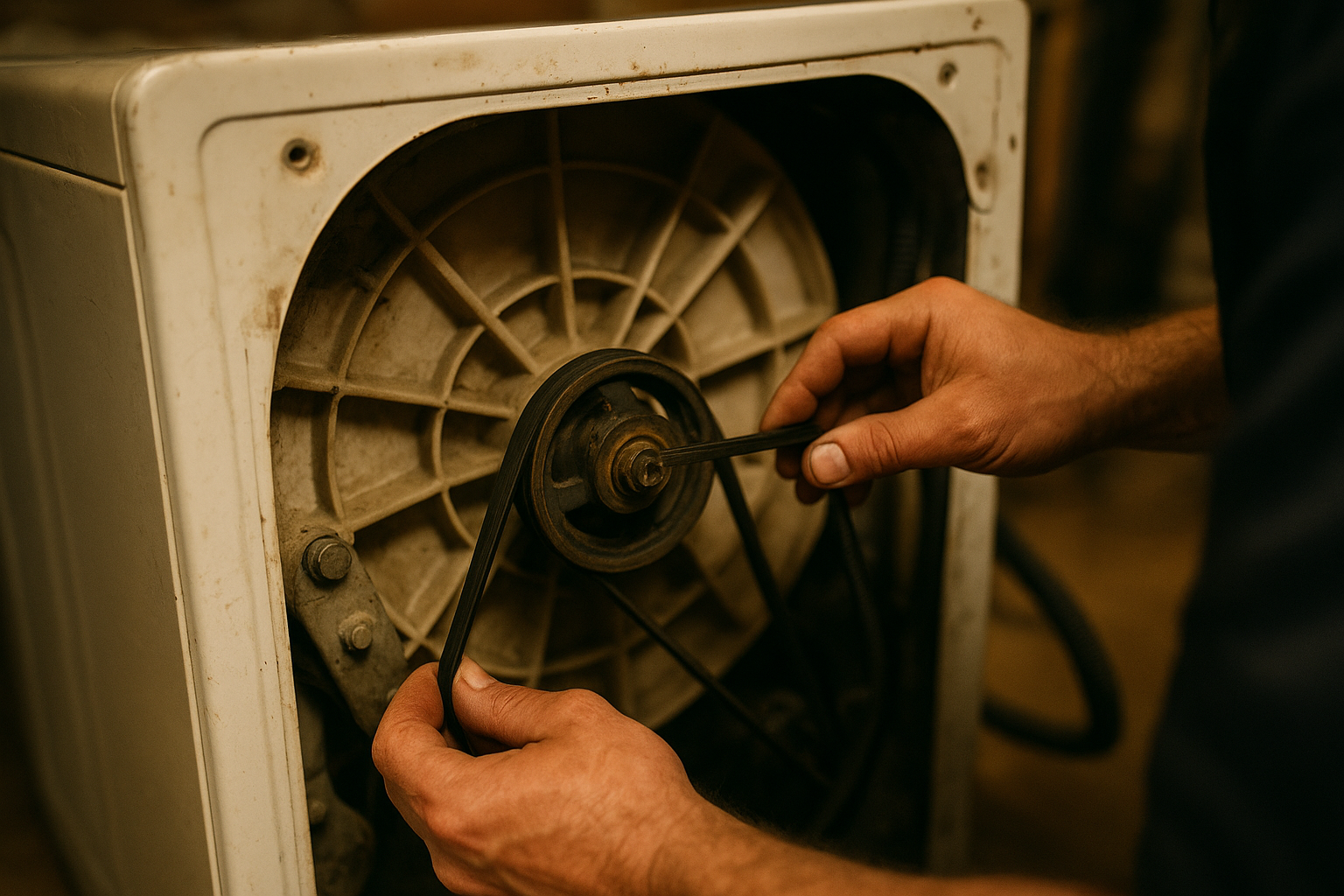
Checking the drive belt is one of the fastest washer won’t spin solutions a technician will try first.
Washing Machine Not Spinning? Check the Motor and Drain System
When a washing machine not spinning issue survives the checklist above, the problem is usually mechanical rather than electrical. Two components deserve closer attention: the drive system near the motor and the drain pump that clears water before the spin begins.
Drive Belt and Motor Coupling Wear
Over time, rubber drive belts stretch, crack, or slip off their pulleys, especially on machines older than eight years. Similarly, the motor coupling — a sacrificial part meant to fail before the motor itself does — wears out from repeated heavy loads. Replacing either part generally costs far less than replacing the motor.
Clogged Drain Pump or Hose
Because most washers won’t spin with standing water in the tub, a clogged pump filter or kinked drain hose can masquerade as a motor problem. Clearing lint, coins, and small fabric debris often restores the spin cycle immediately.
DIY Fixes vs. Professional Washer Repair
Homeowners can safely handle the checklist steps above, along with basic cleaning of the drain pump filter. However, replacing a drive belt, motor coupling, or control board involves disconnecting water and power lines, removing the cabinet, and handling electrical components — tasks better suited to an experienced washer repair technician.
In addition, a professional can accurately diagnose whether a repair makes financial sense compared with replacement. For a deeper look at that decision, see this guide on whether it’s worth repairing or replacing a broken washer, or this comparison of repairing versus replacing your washer.
How Much Does It Cost to Fix a Washer That Won’t Spin?
Costs vary depending on the part involved. A lid switch or belt replacement typically falls between $100 and $250 including labor, while motor, control board, or transmission repairs can range from $250 to $450. As a general rule often cited by consumer advocacy groups, a repair is usually worth pursuing when it costs less than half the price of a comparable new unit.
For Santa Rosa-specific pricing, this washing machine repair cost guide breaks down typical local rates, and this article on repairing versus replacing a washer in Sonoma County compares long-term value. The ENERGY STAR program also notes that well-maintained washers commonly last 10 to 13 years, which is useful context when weighing repair against replacement.
Comparing repair costs against replacement value helps homeowners choose the right washer won’t spin solutions for their budget.
Why Santa Rosa Homeowners Trust Local Appliance Repair Pros
Goldridge Appliance Repair provides fast, same-day repair service for washers, dryers, refrigerators, ovens, and dishwashers throughout Santa Rosa, California. Skilled technicians diagnose spin-cycle failures on-site, explain the problem in plain language, and offer fair, transparent pricing before any work begins.
Consequently, homeowners avoid guesswork and unnecessary part replacements. Those still weighing their options can review this comparison of whether repairing a washing machine is worth it, or visit Goldridge Appliance Repair directly to schedule a diagnostic visit.
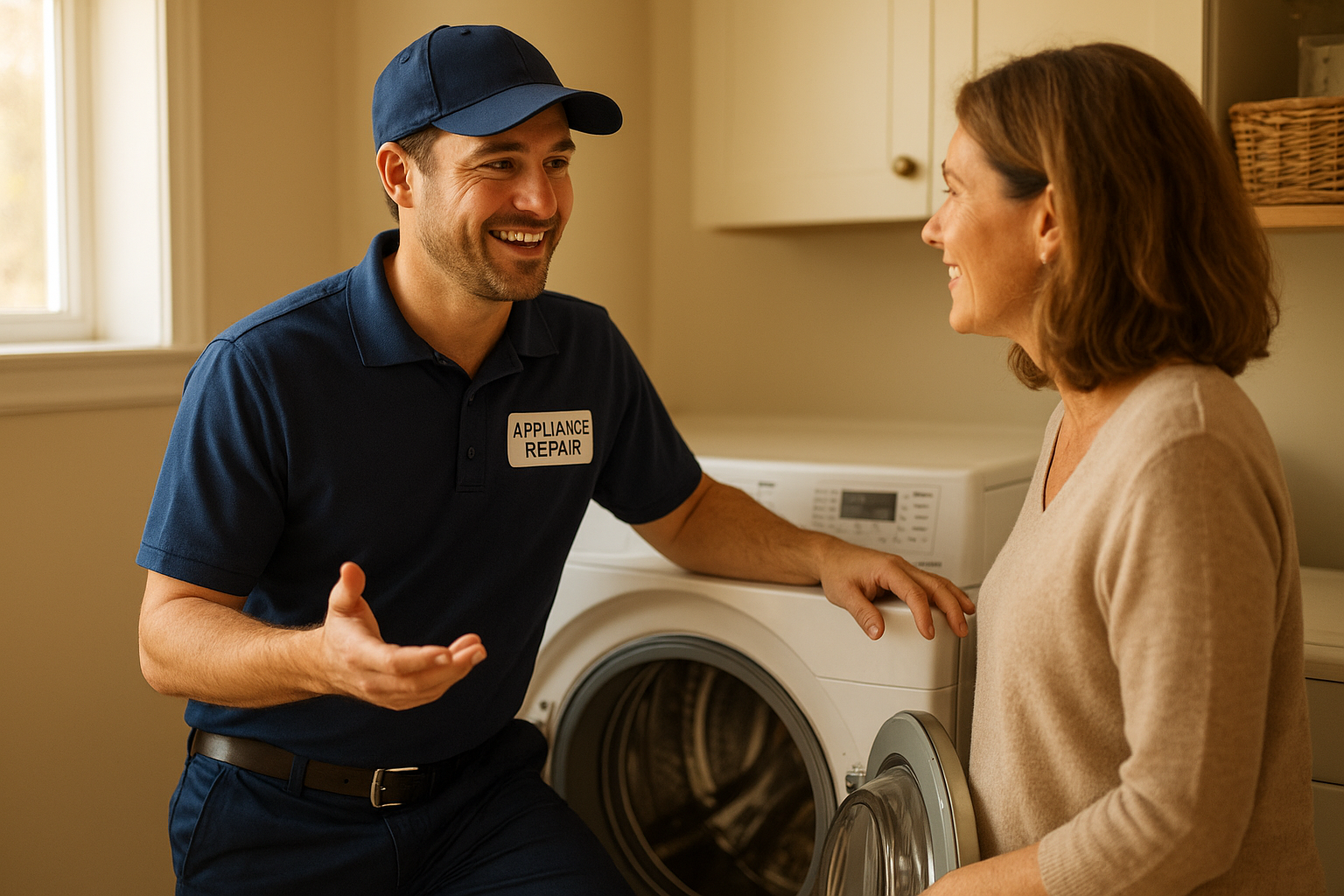
Local technicians walk homeowners through washer won’t spin solutions before any repair begins.
Frequently Asked Questions About Washer Won’t Spin Solutions
What is the most common cause of a washer that won’t spin?
The most common cause is a faulty lid or door switch, which is a safety feature that blocks the spin cycle if the lid isn’t fully latched. Worn drive belts and unbalanced loads are the next most frequent causes.
How do I know if my washer’s lid switch is broken?
Press firmly on the switch while the lid is closed and listen for a distinct click; if nothing happens, the switch is likely failing. A technician can confirm this with a simple continuity test.
Why does my washing machine fill and agitate but not spin?
This usually points to a problem after the wash phase, such as a clogged drain pump, a broken drive belt, or a worn motor coupling. The machine can complete earlier steps but lacks the mechanical connection needed to spin.
What are the best washer won’t spin solutions I can try at home?
Effective washer won’t spin solutions include redistributing an unbalanced load, confirming the lid latches properly, checking for a tripped breaker, and inspecting the drive belt for cracks. These four checks resolve most spin failures without professional help.
How much does professional washer repair typically cost?
Minor fixes like a lid switch or belt replacement usually run between $100 and $250 including labor, while motor or control board repairs can cost $250 to $450. Costs vary by brand, model, and local labor rates.
Is it worth repairing a washer that won’t spin, or should I replace it?
As a general rule, repair is worthwhile if the cost is under half the price of a new comparable washer and the machine is less than eight years old. Older units with multiple failing components often make more sense to replace.
How long does it take to fix a washer that won’t spin?
Simple fixes such as a lid switch or belt swap typically take a technician 30 to 60 minutes. More involved repairs, like replacing a motor or control board, can take one to two hours.
What’s the difference between a drive belt issue and a motor coupling issue?
A broken drive belt usually causes a loud slapping noise or a drum that spins freely by hand with no resistance. A failed motor coupling, found mainly on top-load washers, often produces a grinding sound instead.
Can overloading the washer really stop it from spinning?
Yes, an overloaded or unevenly distributed load is one of the most frequent and easiest-to-fix causes of a stalled spin cycle. Built-in balance sensors stop the spin to protect the motor and bearings from damage.
What common mistakes make a washer spin problem worse?
Forcing the machine through repeated cycles without checking the load balance can strain the motor and bearings further. Ignoring grinding or clicking noises, or attempting electrical repairs without disconnecting power, also increases the risk of costlier damage.
How can I prevent spin cycle failures in the future?
Avoid overloading the drum, distribute heavy items evenly, and clean the drain pump filter every few months. Routine maintenance and prompt attention to unusual noises help extend the life of the belt and motor coupling.
Do front-load and top-load washers fail differently when they won’t spin?
Top-load washers more often fail due to drive belts or motor couplings, while front-load washers more commonly experience door lock or drain pump failures. Both types can also be affected by unbalanced loads.
Final Thoughts on Washer Won’t Spin Solutions
In summary, washer won’t spin solutions usually start with a few simple checks: redistributing the load, confirming the lid latches, and inspecting the drive belt and drain pump. If these steps don’t restore the spin cycle, the issue is likely a worn motor coupling or electrical fault that calls for a trained technician. Above all, addressing the problem early prevents minor wear from turning into a costly motor or transmission repair, so Santa Rosa homeowners can get their laundry routine back on track quickly and affordably.
